Knee Osteoarthritis: What Works Before You Consider Surgery
Knee pain in Indian adults often starts a decade earlier than in Western populations. Most patients can delay or avoid replacement — but not by resting the knee.
Read article
Bone & Joint
Most back pain resolves within six weeks, and an MRI early in the course often causes more harm than good by finding changes that were never the problem.
Disc bulges, degenerative changes and mild disc prolapse are found on MRI in a large proportion of people who have no back pain at all — around a third of thirty-year-olds and the majority of sixty-year-olds. Finding one in a person with pain does not establish that it is the cause.
Worse, being shown a report full of alarming terms makes people move less, fear activity and recover more slowly. Guidelines therefore advise against imaging in the first six weeks of ordinary back pain in the absence of warning features.
Loss of bladder or bowel control with back pain is cauda equina syndrome — go to an emergency department the same hour. Delay causes permanent damage.
Back pain recurs in the majority of people, and what reduces recurrence is not avoiding movement but building tolerance to it. Core strengthening — the deep abdominal and back muscles — is the best-evidenced preventive measure, followed by weight reduction and general fitness.
Lifting technique matters: bend the knees and hips rather than the back, keep the load close to the body, avoid twisting while lifting, and get help for anything genuinely heavy. For farm and construction work, alternating tasks and taking short breaks reduces cumulative load.
Surgery is indicated for cauda equina syndrome as an emergency, for progressive neurological weakness, and for disabling leg pain from nerve compression that has not settled after six to twelve weeks of adequate conservative treatment with imaging that matches the symptoms.
Surgery for back pain alone, without leg symptoms and without a clear structural cause, has poor outcomes. If an operation is proposed for pure back pain, a second opinion is entirely reasonable.
This article is general health education written and reviewed by the Department of Orthopaedics at SIMS. It is not a substitute for an examination, a diagnosis or the advice of your own treating doctor, and it cannot account for your history, medicines or reports. If a symptom is sudden or severe — chest pain, stroke symptoms, breathing difficulty, serious injury, seizures or heavy bleeding — call 9281862028 or come straight to the emergency department instead of reading further.
Related reading
Articles our patients most often read alongside this one.
Bone & JointKnee pain in Indian adults often starts a decade earlier than in Western populations. Most patients can delay or avoid replacement — but not by resting the knee.
Read articleBone & JointA hip fracture after sixty carries a mortality comparable to some cancers. The bone loss that causes it is painless, detectable and treatable years in advance.
Read article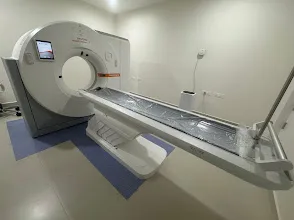 Diagnostics
Patients often ask for the 'best' scan. There is no best — each shows different things, and the right choice depends entirely on the question being asked.
Read articleDescribe the symptom and the appointment desk will route you to the correct consultant. For anything sudden or severe, come to the emergency department instead of waiting for a callback.