Understanding Your Blood Test Report
A blood report with a few values marked high or low causes a great deal of unnecessary alarm. Here is what the common parameters actually mean.
Read article
Diagnostics
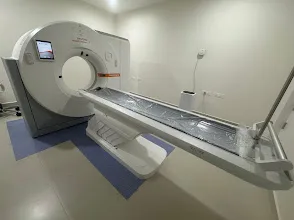
Patients often ask for the 'best' scan. There is no best — each shows different things, and the right choice depends entirely on the question being asked.
X-ray uses ionising radiation and is fast, cheap and excellent for bones, chest and abdominal gas patterns. CT uses X-rays taken from many angles and reconstructed by computer — it is very fast, outstanding for acute bleeding, trauma, lung disease, kidney stones and acute abdominal conditions, and it involves a higher radiation dose.
Ultrasound uses sound waves with no radiation at all, making it the first choice in pregnancy and children. It is excellent for the liver, gallbladder, kidneys, uterus, ovaries, thyroid and blood vessels, but it cannot see through bone or gas. MRI uses magnetic fields, involves no radiation, and gives the best soft-tissue detail — for brain, spinal cord, ligaments, cartilage and pelvic organs — but it is slow, noisy and more expensive.
MRI is not automatically superior to CT. In acute head injury, CT is both faster and better at showing fresh bleeding — which is exactly what needs to be known in that moment.
A chest X-ray delivers roughly the same radiation as a few days of natural background exposure. A CT abdomen is considerably more — comparable to two to three years of background exposure. The risk from any single scan is very small, but it accumulates, which is why unnecessary repeat scanning is avoided.
When a scan is clinically indicated, the benefit almost always outweighs the risk substantially. Refusing a CT for a suspected stroke or serious head injury on radiation grounds is a far larger risk than the radiation itself.
Radiology reports describe what is seen, which includes many incidental findings of no clinical importance — small cysts, mild degenerative change, minor variations of anatomy. Reading a report without your treating doctor almost always causes unnecessary alarm.
Always bring previous scans. Comparison changes interpretation completely: a nodule that is unchanged over three years means something entirely different from a new one.
This article is general health education written and reviewed by the Departments of Radiology & Pathology at SIMS. It is not a substitute for an examination, a diagnosis or the advice of your own treating doctor, and it cannot account for your history, medicines or reports. If a symptom is sudden or severe — chest pain, stroke symptoms, breathing difficulty, serious injury, seizures or heavy bleeding — call 9281862028 or come straight to the emergency department instead of reading further.
Related reading
Articles our patients most often read alongside this one.
DiagnosticsA blood report with a few values marked high or low causes a great deal of unnecessary alarm. Here is what the common parameters actually mean.
Read article Bone & Joint
Most back pain resolves within six weeks, and an MRI early in the course often causes more harm than good by finding changes that were never the problem.
Read articleDescribe the symptom and the appointment desk will route you to the correct consultant. For anything sudden or severe, come to the emergency department instead of waiting for a callback.