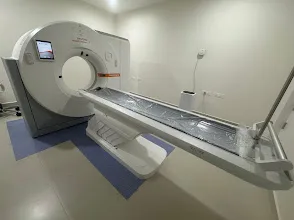
CT Scan, MRI or Ultrasound: Which Test and Why
Patients often ask for the 'best' scan. There is no best — each shows different things, and the right choice depends entirely on the question being asked.
Read article
Diagnostics
A blood report with a few values marked high or low causes a great deal of unnecessary alarm. Here is what the common parameters actually mean.
A reference range represents the values found in 95% of a healthy population. By definition, one in twenty healthy people falls outside it on any given test. A marginally abnormal value in a person who feels entirely well is often of no significance at all.
Ranges also vary between laboratories depending on the method and equipment used, which is why comparing a value against a different laboratory's range can mislead. Always interpret against the range printed on that report.
Never start, stop or change medication based on a report alone. The pattern of several values, your symptoms and your history together tell the story — a single number does not.
In the liver panel, ALT and AST reflect liver cell injury and are commonly raised in fatty liver, alcohol use and viral hepatitis. Alkaline phosphatase and GGT point towards bile duct problems. Bilirubin rises in jaundice, and albumin reflects the liver's synthetic capacity over time.
In the kidney panel, creatinine is the main marker, but it varies with muscle mass — a 55 kg elderly woman and a 90 kg young man with the same creatinine have very different kidney function. This is why eGFR, which adjusts for age and sex, is the more useful number. Urea rises with dehydration and gastrointestinal bleeding as well as kidney disease.
Values that are markedly rather than marginally abnormal, values that are changing progressively across serial reports, and abnormal values accompanied by symptoms all warrant proper evaluation.
Critical values — a very low platelet count, dangerously high potassium, a positive blood culture — are telephoned directly to the treating doctor by our laboratory rather than waiting for the printed report to be collected.
This article is general health education written and reviewed by the Departments of Radiology & Pathology at SIMS. It is not a substitute for an examination, a diagnosis or the advice of your own treating doctor, and it cannot account for your history, medicines or reports. If a symptom is sudden or severe — chest pain, stroke symptoms, breathing difficulty, serious injury, seizures or heavy bleeding — call 9281862028 or come straight to the emergency department instead of reading further.
Related reading
Articles our patients most often read alongside this one.
Describe the symptom and the appointment desk will route you to the correct consultant. For anything sudden or severe, come to the emergency department instead of waiting for a callback.